Practising cognitive behavioural therapy
Table of contents:
What is CBT?
Cognitive behavioural therapy (CBT) sounds like a mouthful. But the big idea behind it is very simple: our thoughts, our feelings, and our actions are constantly talking to each other.
Whenever something happens in your day, your mind reacts on three connected levels:
- What you think: The story or interpretation running in your head.
- What you feel: Your mood, plus the feelings in your body, like a knot in your stomach or a tight chest.
- What you do: The choices, habits, and actions you take next.
When one of these parts gets stuck, the other two usually get pulled down with it.
Imagine you have to give a short presentation. Your brain might pop up with a thought:
"I am going to stumble and make a fool of myself."
That thought sets off a feeling: your stomach drops and your palms sweat. Because your body feels anxious, you put off practising until late at night. And because you practised in a panic, the talk feels shaky. That seems to prove your first worrying thought was right all along.
CBT is not about "positive thinking" or putting on a fake smile. It's an honest, curious look at these loops, plus practical tools to help you gently step in and break them.
The CBT triangle
Psychologists often draw this connection as a triangle. Every corner touches and influences the other two:
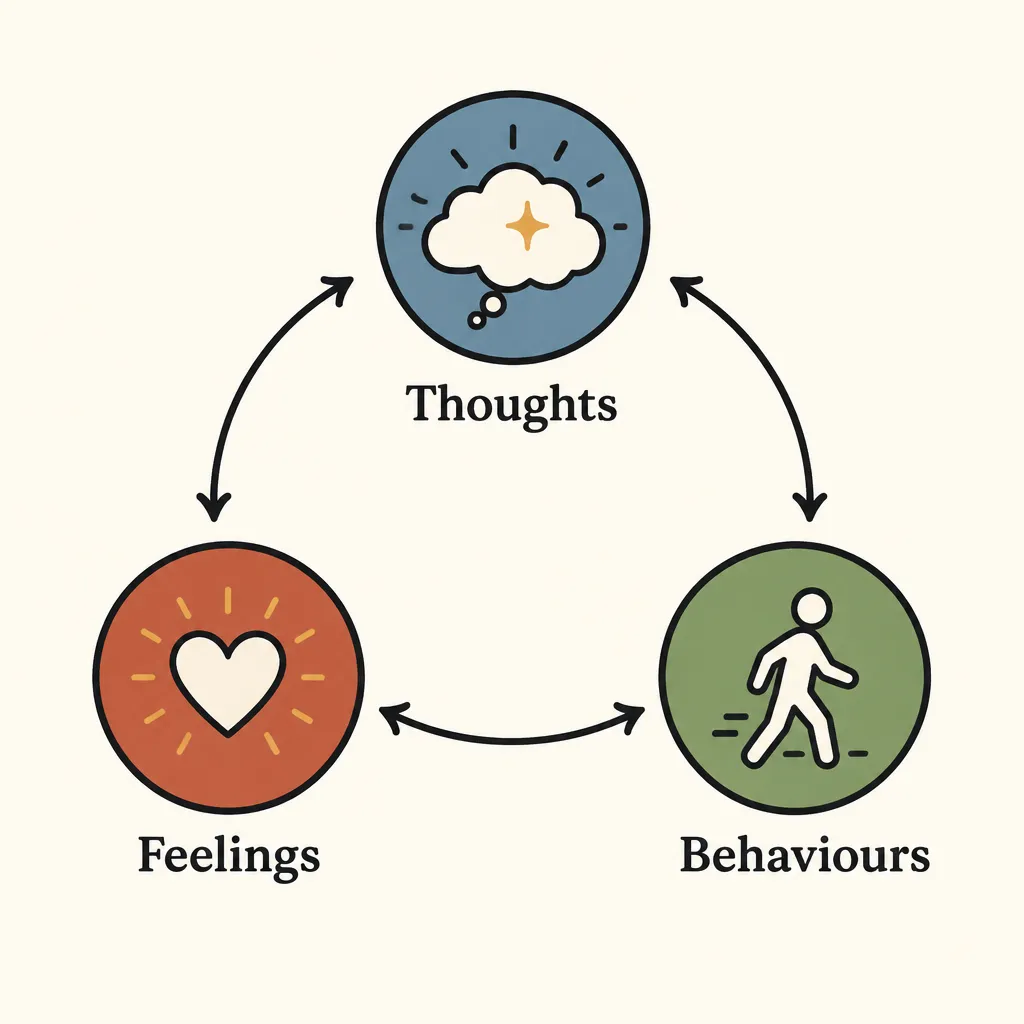
The good news about the triangle is that you don't have to fix everything at once. Because the three corners are linked, changing just one corner gently changes the whole system.
- If you change what you do (take a brisk walk, send one short email), your body calms down and your mind clears.
- If you test what you think (asking, "Is that really true, or is my brain just guessing the worst?"), your anxiety may drop.
- If you soothe your body (with slow, steady breathing), your thoughts might stop racing and it gets easier to act.
What do we do in CBT?
In short: we run small, friendly experiments.
Instead of treating worried thoughts as hard facts, or waiting around until you "feel like" doing something hard, you step back like a curious scientist. You take a problem out of your head, put it on paper, and ask:
"What is one small, safe thing I could test this week to see what actually happens?"
You don't need to change your whole life by Friday. My job as a psychologist is not to sit in a chair and judge you. It is to share good tools, help you set up simple tests, and find out what truly works in your real, everyday life. (If you want a framework for this mindset, see The eight-week experiment).
CBT tools
The following tools come from my clinical training and from evidence-based practice. They are here to help you put CBT to work in daily life. All of them are free for personal use, or to try out together with a therapist. Use what helps, and leave the rest.
- Assertive communication
- Behavioural activation
- Behavioural experiments
- Character strengths
- Cognitive restructuring
- Exposure: facing fears step-by-step
- Mindfulness
- Pacing and energy scheduling
- Problem solving
- Stimulus control and worry time
- Values-based goal setting
Assertive communication
(Or: clear and kind boundaries)
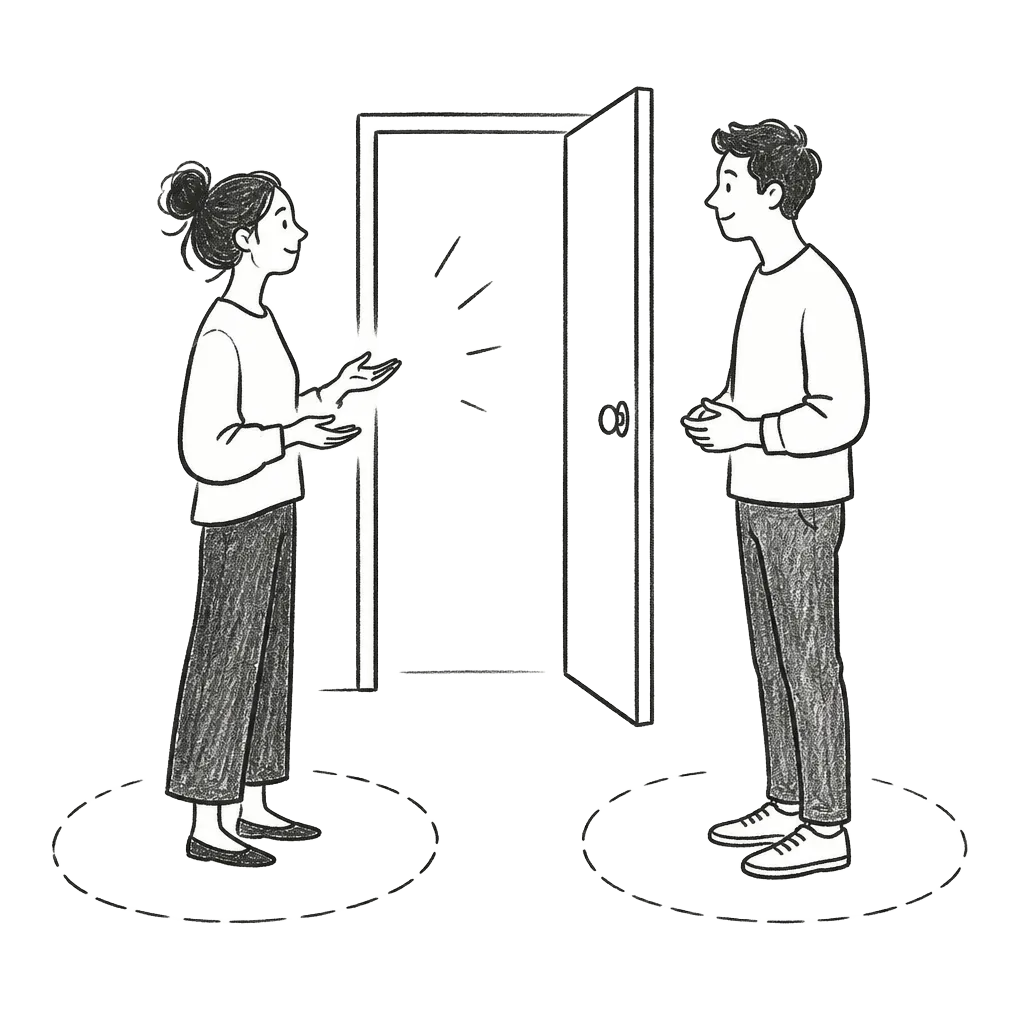
When we feel upset, most of us swing between two unhelpful poles. We stay quiet to keep the peace until we quietly resent everyone. Or we bottle things up until we snap. Assertive communication is the calm middle road. It is the skill of saying what you need, setting clear limits, and saying "no" with warmth, without being aggressive and without apologising for having needs.
- Free resource: CCI Assert Yourself modules (free workbook and worksheets; no login needed).
Behavioural activation
(Or: action before motivation)
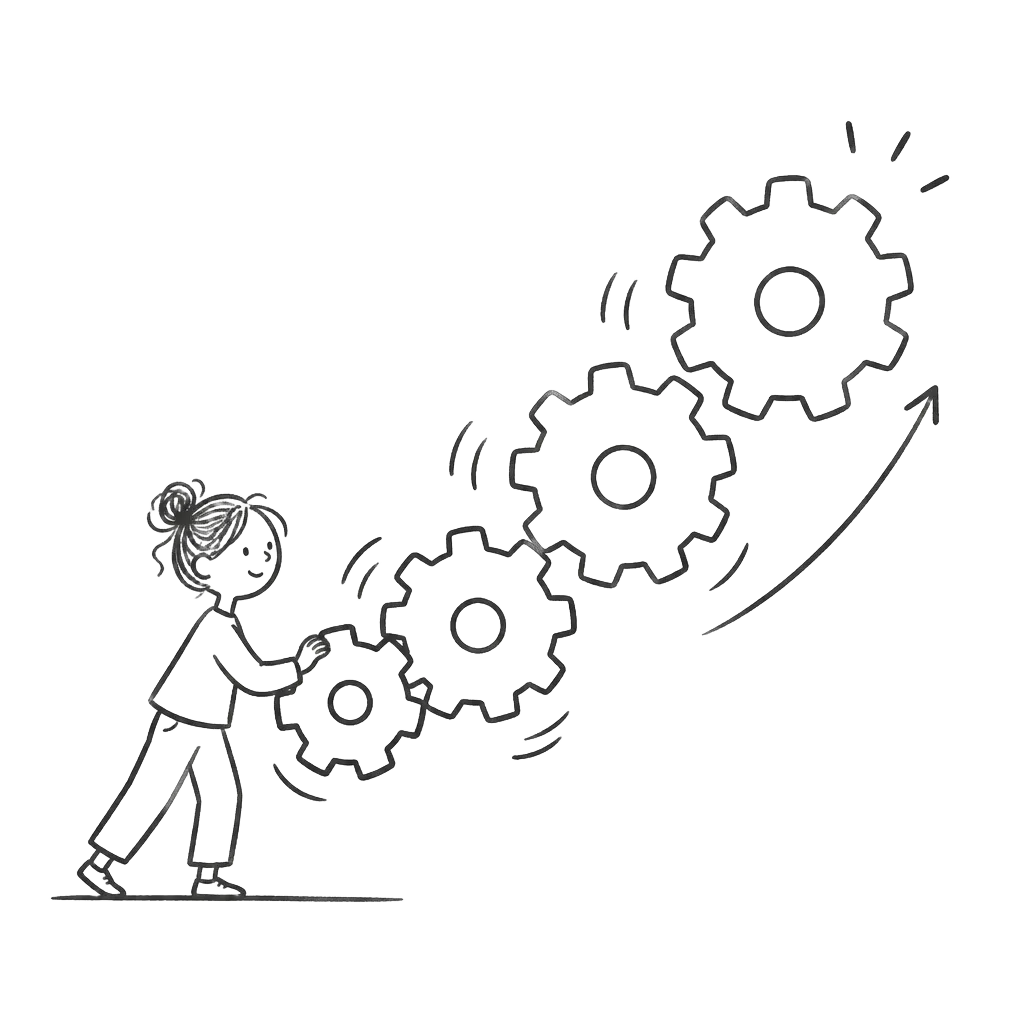
When energy dips, our first instinct is to curl up on the sofa and wait until we feel better before doing anything. But waiting for motivation is a trap: low mood feeds on stillness. Behavioural activation flips the order. Action comes first, and motivation follows. One small task, like washing three mugs or walking round the block, gives your brain a spark of energy, and your mood starts to catch up.
Related reading: The best workout is the one you actually do
Free resource: CCI Back from the Bluez (free activity scheduling and mood log worksheets; no login needed).
Behavioural experiments
(Or: testing what your head tells you)
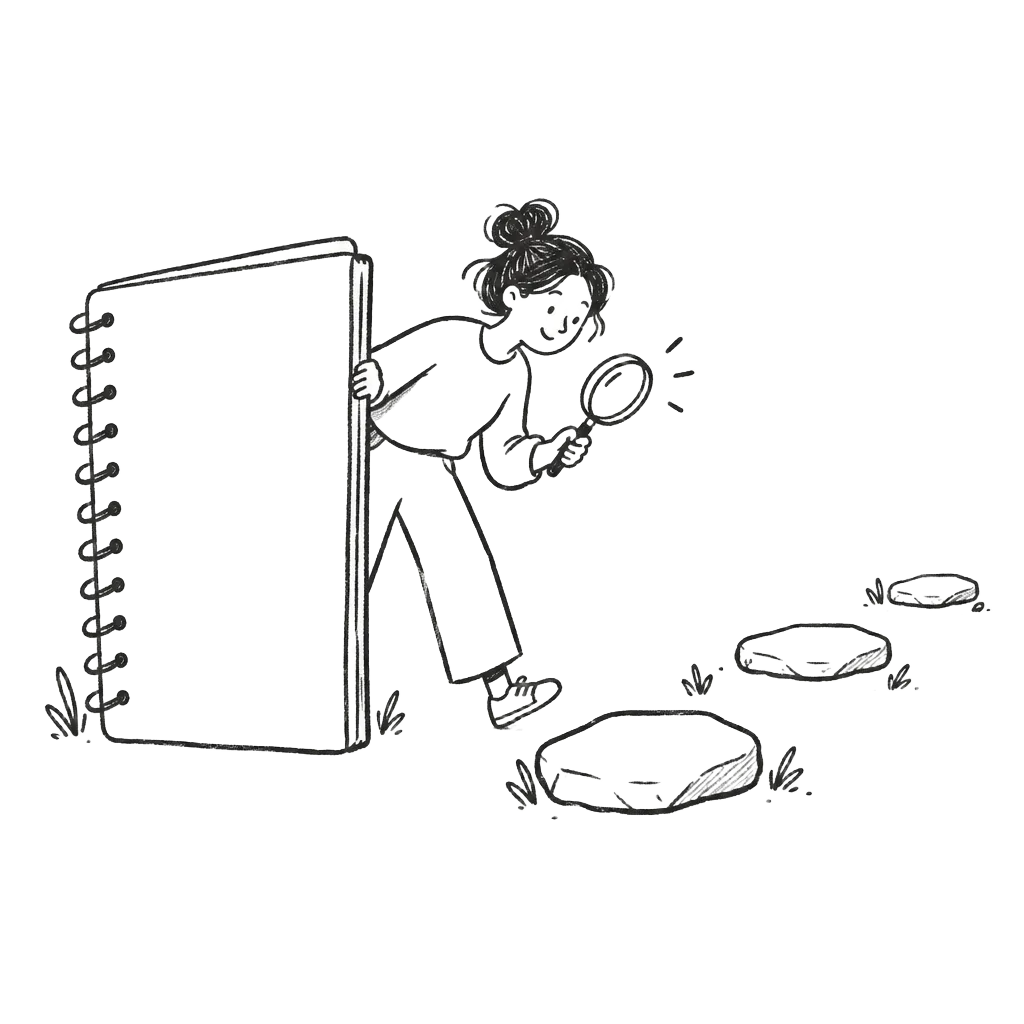
Your brain is a brilliant storyteller but a terrible fortune-teller. When you feel anxious, it loves to make scary predictions: "If I speak up, everyone will laugh." Instead of arguing with that thought in your head, a behavioural experiment puts it on trial in the real world. You set up a small, safe test, drop your usual safety habits, and see what the evidence actually says.
- Related reading: The eight-week experiment: How to turn vague goals into real projects
- Free resource: Behavioral Experiment (interactive web guide and experiment planning sheets; no login needed).
Character strengths
(Or: building on what is already right with you)

Much of psychology looks at what is broken. Character strengths look at what is already strong. The VIA framework lists 24 strengths we all share, such as curiosity, fairness, kindness, and perseverance. When you know your top strengths and use them on purpose during hard weeks, hard days feel less heavy.
- Related reading: What does zest look like on a Tuesday afternoon? — on turning abstract strengths into daily actions.
- Free resource: VIA Institute free character survey (free evidence-based test; needs a quick free email sign-up).
Cognitive restructuring
(Or: fact-checking your thoughts)

We often treat our first automatic thoughts as solid facts. Cognitive restructuring is like being a fair-minded detective. When an upsetting thought takes over, you write it down and look at the real evidence for and against it. You do not force fake happy thoughts. You look for a grounded, balanced view that helps you breathe easier.
- Related reading: A field guide to thinking traps — ten common cognitive traps and how to dismantle them.
- Related reading: Discover the hidden power of beliefs — on examining the assumptions beneath your thoughts.
- Free resource: NHS thought record exercise (guided steps to catch and reframe unhelpful thoughts; no login needed).
Exposure: facing fears step-by-step
(Or: teaching your brain it can handle hard things)

When something scares us, we avoid it. But avoidance tells your brain the situation truly was dangerous, so the fear grows. Exposure is the gentle, planned practice of stepping toward what you fear in small steps. When you stay with the feeling until your body settles, your nervous system learns firsthand that you can handle it.
- Free resource: NHS Every Mind Matters facing fears guide (practical steps to build a fear ladder and practise gradual exposure; no login needed).
- Free resource: Oxford Health NHS anxiety self-help guide (evidence-based anxiety strategies and gradual exposure steps; no login needed).
- Free resource: CCI anxiety modules and fear ladders (structured workbooks and step-by-step planning sheets; no login needed).
Mindfulness
(Or: watching the weather)

Mindfulness is not about emptying your mind or sitting perfectly still. It is the skill of noticing what is happening right now, with curiosity instead of judgement. You learn to treat your thoughts and feelings like passing weather. Storm clouds come and go, but the sky behind them never leaves.
- Related reading: How I started my meditation practice — a few things that helped me put mindfulness into a daily routine.
- Free resource: Oxford Mindfulness Foundation free practices (free open-access audio practices; no login needed).
- Free resource: Free meditations from Mindfulness: Finding peace in a frantic world
Pacing and energy scheduling
(Or: breaking the boom-and-bust cycle)
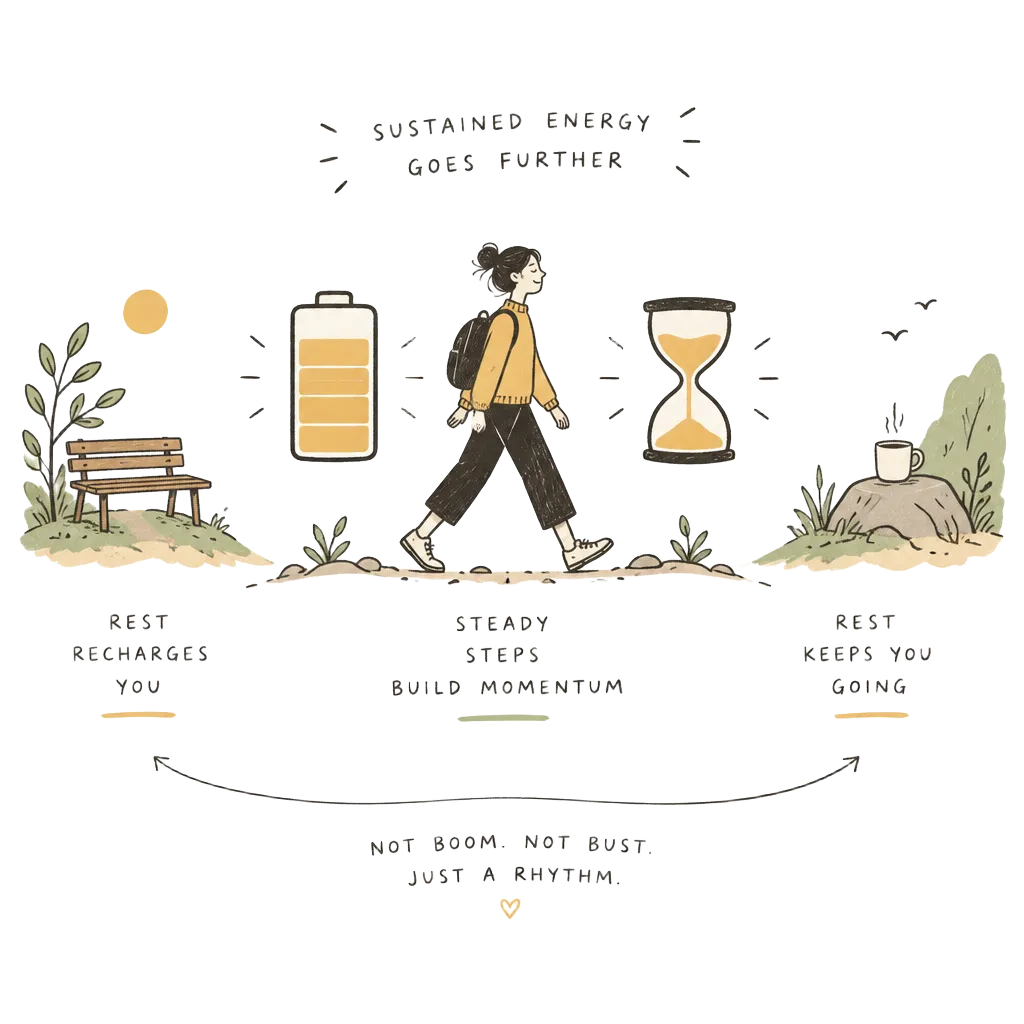
When people feel stressed or tired, they often fall into the "boom-and-bust" trap. On a good day they push hard and try to do everything (the boom). Then they crash for days because their battery is empty (the bust). Pacing means planning short, real breaks before you run dry, so your energy stays steady all week.
- Related reading: The best workout is the one you actually do — on consistency and looking after yourself, even when you don't feel like it.
- Free resource: CCI pacing worksheets (free pacing sheets for fatigue and stress; no login needed).
Book: Återhämtningsguiden by Niclas Almén.
Problem solving
(Or: untangling the knot)

When a problem feels huge, our brains freeze. Structured problem solving breaks it into five clear steps: describe the facts without panic, list all kinds of ideas (sensible and wild), rank them by what you can actually control, pick one step to test, and review how it went.
- Free resource: NHS Inform — Problem-solving self-help guide (free guide; no login needed; available as PDF).
Stimulus control and worry time
(Or: putting worry in a container)
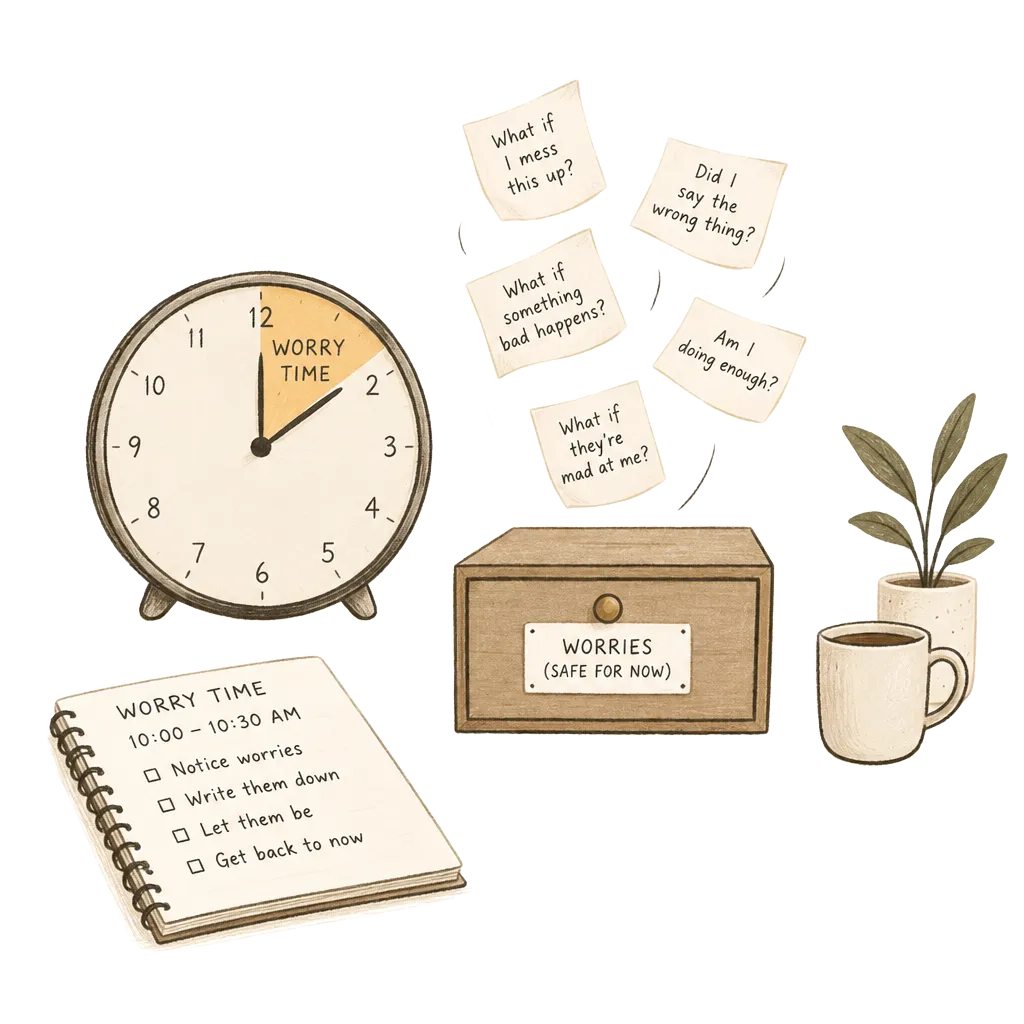
If you let worry run loose, it follows you everywhere: into your workday, your dinner, and your bed. Stimulus control sets clear borders around worry. You pick one 15-minute "worry window" in the late afternoon. If an anxious thought pops up at 10:00 or 23:00, you jot it down and tell yourself: "I will look at this at my worry time." Your bed and your downtime stay free.
- Free resource: NHS Every Mind Matters (practical CBT techniques to categorise and tackle worries; no login needed).
- Free resource: Oxford Health NHS worry time guide (step-by-step guide to setting aside dedicated worry time; no login needed).
Values-based goal setting
(Or: following your own compass)
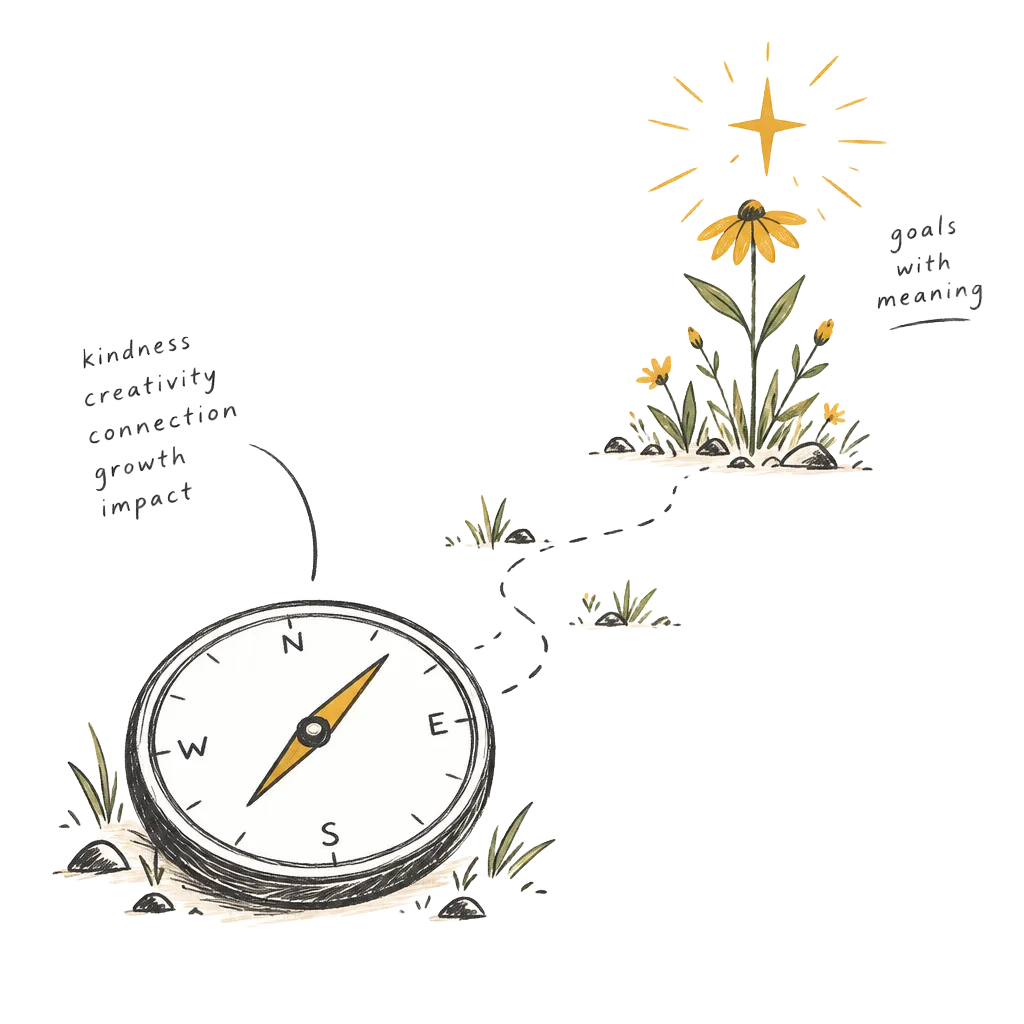
Goals are what you want to achieve. Values are how you want to live. When we set goals only to please others or tick boxes, we burn out fast. Values work like a compass: they point toward what truly matters to you, like curiosity, friendship, or creativity. When small daily goals are tied to your own values, working toward them feels rewarding instead of punishing.
- Related reading: Personal growth: A practical guide for curious minds — on building an inner scorecard and defining your direction.
- Free resource: ACT Mindfully free values worksheets (Russ Harris's free Bulls-Eye and values checklists; no login needed).
Connected notes
- A field guide to thinking traps — ten common cognitive traps, everyday examples, and how to spot them early.
- What does zest look like on a Tuesday afternoon? — how to turn abstract VIA character strengths into concrete actions.
- The eight-week experiment — how to turn vague intentions into practical life experiments.
- Discover the hidden power of beliefs — examining core assumptions and shifting from fixed to growth patterns.
- What a fruit experiment taught me about changing habits - a simple, seven-step approach to changing everyday habits—tested on my own goal of eating more fruit.
- Mind is a muscle — why our brains can adapt, change, and grow at any age.
- My staying-well plan — how I apply these psychological habits and tools in my own routines and everyday life.
- The best workout is the one you actually do — physical pacing, consistency, and sustainable recovery.
A gentle note: these tools are educational guides for self-reflection and personal growth. They are not a replacement for medical advice, psychiatric assessment, or personal clinical therapy. If you are in severe distress or crisis, please reach out to your local healthcare provider or a crisis support service.