How I use time blocking
If you have ever tried planning your day in fifteen-minute chunks, you probably know the feeling of total collapse by 11:00 in the morning.
One unexpected phone call or urgent email arrives, the schedule derails, and the rest of the day becomes an exercise in guilt.
During my peak "productivity phase", I treated my calendar like a game of Tetris. Every minute had a specific task assigned to it. It looked neat on paper, but real life rarely cares about colour-coded lines.
The breakthrough for me came from Charlie Gilkey at Productive Flourishing: stop scheduling individual tasks, and start scheduling blocks of energy.
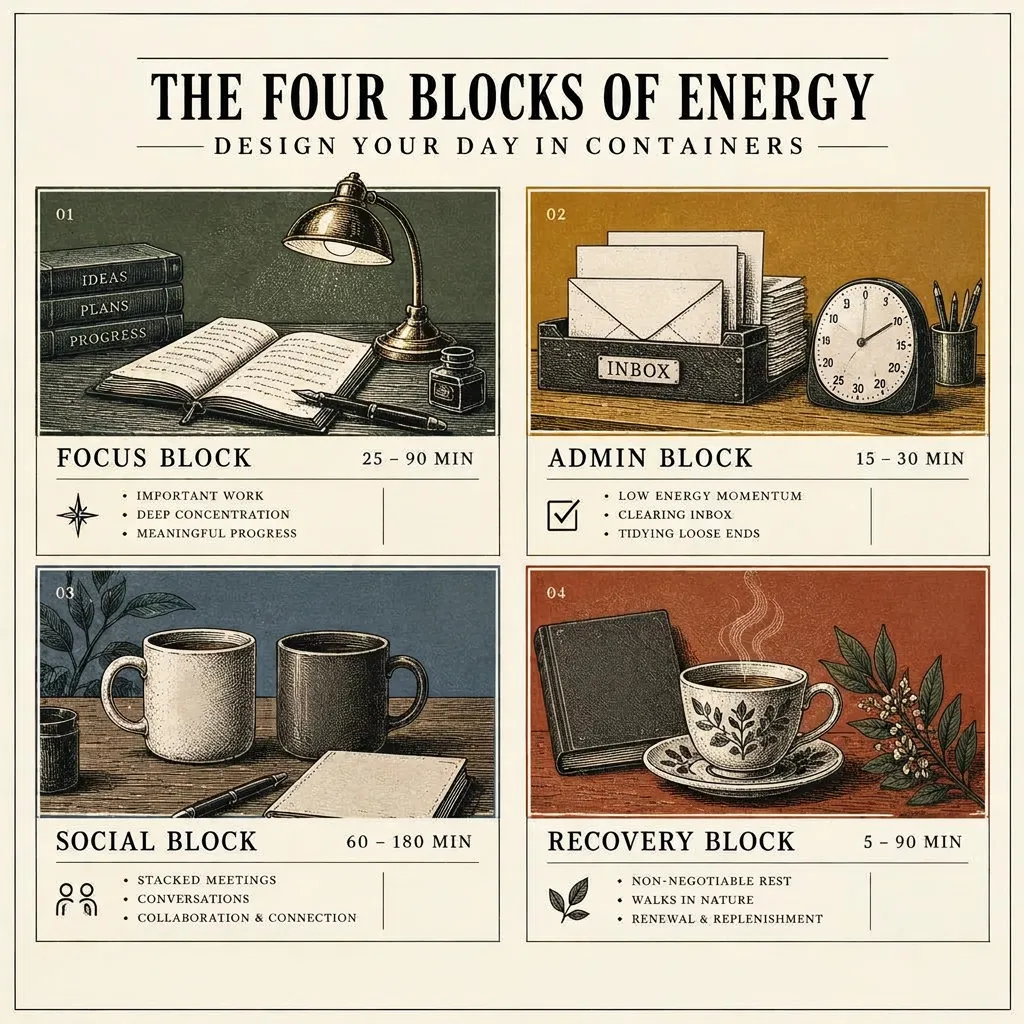
Instead of asking, "What exact task should I do at 14:15?", you build your day out of four basic containers. You pick the container first, and choose the specific task once you step inside it.
Here are the four blocks I use to organise my week:
1. Focus blocks (25 to 90 minutes)
These are uninterrupted stretches reserved for work that truly matters.
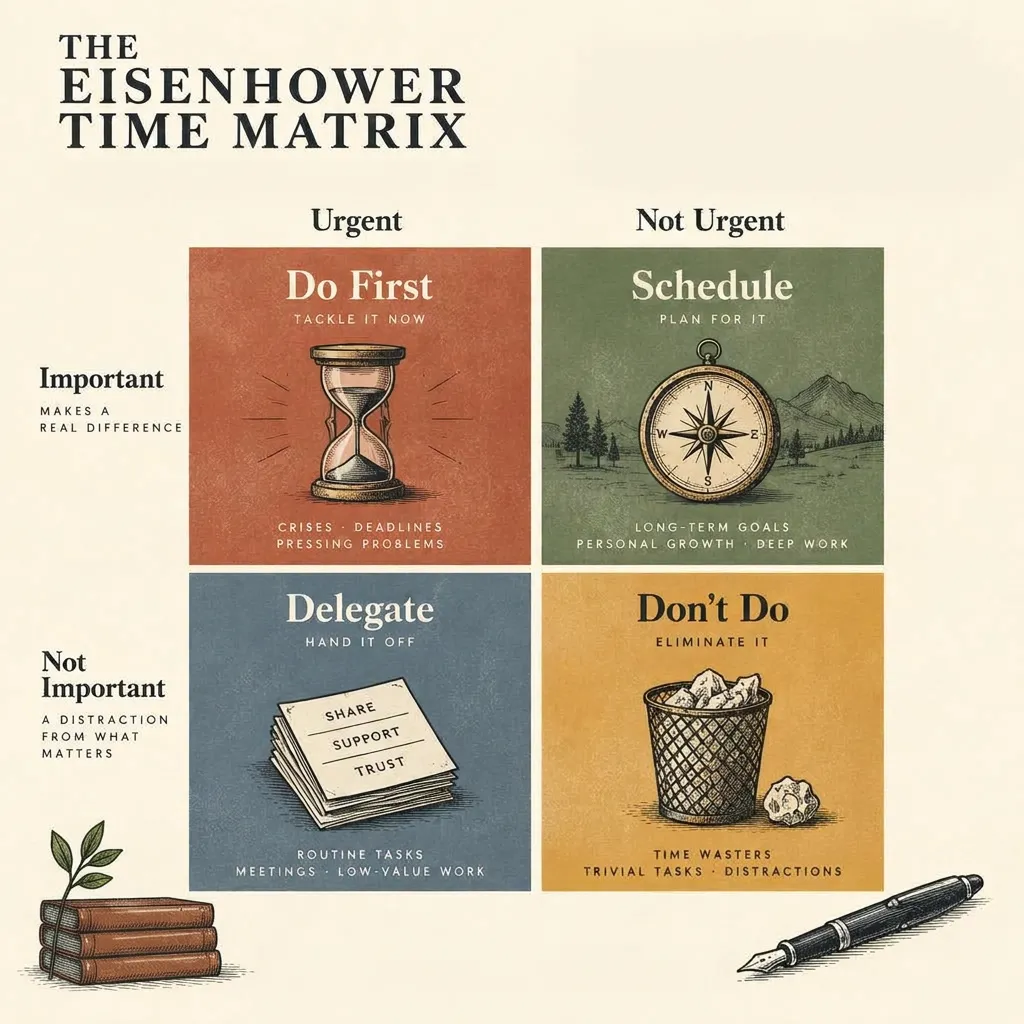
Think of Eisenhower's classic rule: this is time for what is important, but not urgent. Writing an essay, reviewing clinical notes, or working through a problem that demands your full attention. During a focus block, all notifications go off, the browser tabs stay shut, and you work on one thing at a time.
Keep them between 25 and 90 minutes. Anything shorter barely lets you find your rhythm; anything longer usually leads to screen fatigue and fuzzy thinking.
2. Admin blocks (15 to 30 minutes)
Admin blocks are for the low-energy chores that keep life ticking along: answering messages, clearing your inbox, paying a bill, or tidying your desk.
The secret here is to let go of perfection. The goal is momentum, not spotless order. Set a timer for twenty minutes, clear as much clutter as you can, and stop when the buzzer sounds.
A quick warning: Some admin tasks secretly disguise themselves as monsters. Sorting out a messy tax issue or fixing an entire archive is not light admin—it takes heavy mental energy. If an administrative chore feels daunting, promote it to a dedicated focus block instead of letting it ruin your morning.
3. Social blocks (60 to 180 minutes)
Work rarely happens in total isolation. Social blocks are set aside for meetings, calls, client sessions, or working alongside others.
Talking to people draws on a very different kind of energy than solitary focus. That is why grouping conversations together makes such a difference. When meetings are scattered across your day—one at 10:00, another at 13:30, a third at 16:00—they cut your attention into tiny pieces. Stacking them into a single afternoon block protects the rest of your day for quiet work.
4. Recovery blocks (5 to 90 minutes)
This is the container most people skip, and the main reason most schedules fail.
Your brain is a muscle, not a machine. You cannot jump straight from an intense ninety-minute focus session into another heavy meeting without your attention wearing thin.
Recovery blocks are non-negotiable breathers: a ten-minute walk around the block, making a fresh cup of tea, having lunch away from your laptop, or resting on the sofa without looking at a screen.
Sometimes recovery is just a five-minute pause between calls; on a heavy day, it might be a full hour of quiet rest. Treat it with the same respect you give your most important meetings. On my most busy days, I listen to the 3-minute breathing space as a way to anchor myself in the present moment.
Build the container first
The real gift of this system is peace of mind.
When you sit down at your desk, you don't have to fight with twenty competing items on a frantic to-do list. You only have to ask:
"What block am I in right now?"
If it's an admin block, answer your messages without feeling guilty that you're not writing your masterpiece. If it's a focus block, shut the door and dive in. And when it's time for recovery, step away without looking back or feeling guilty about it.
More resources on this topic:
- How to Be a Productive Powerhouse Using Time Blocking
- Maker's Schedule, Manager's Schedule
- The books Start Finishing, Getting Things Done and Eat That Frog!